

Social Media Analytic using NLP
We all use a language that both parties understand to communicate. Today, computers play a crucial role in our lives, yet they only comprehend machine language.
Updated
On this page
Key takeaways
- We all use a language that both parties understand to communicate.
- Few businesses develop their own platforms for sentiment research.
- Anyway, considering that NLP is way faster than humans can give it an edge start in the world of the future, and who knows, in the future, machines might be able to ‘read between the lines’.
Understanding Natural Language Processing(NLP) #
We all use a language that both parties understand to communicate. What happens, though, when humans wish to talk to computers?
Today, computers play a crucial role in our lives, yet they only comprehend machine language. Because it is highly challenging for humans to understand the meaning of so many 1s and 0s, it makes it very challenging for us to communicate with them.
The idea of Natural Language Processing (NLP) was first brought to the field of technology in the 1950s. It is a part of artificial intelligence that aids a computer in interpreting or manipulating the natural language that humans use when they write or speak.
NLP is one of the technologies that is evolving the fastest. It uses a combination of machine learning, deep learning, and statistical models, and is made possible by the abundance of big data, powerful hardware, and sophisticated algorithms.
NLP for Social Media #
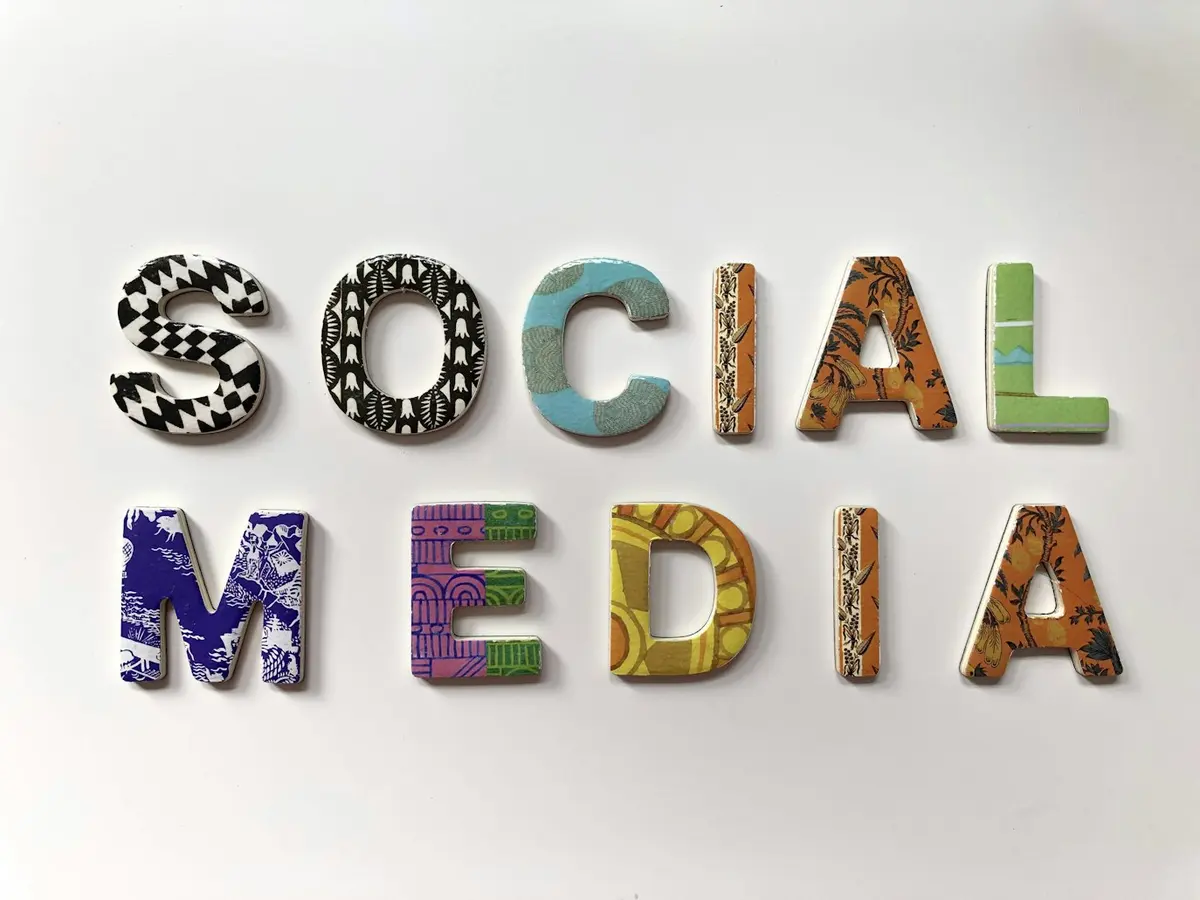
Today, social media has become an integral part of everyone’s life, and the amount of unstructured data produced by social media every day is massive and insane! It is not possible to consume and understand this data manually.
The volume and nature of information available to NLP researchers today have undergone a radical change due to the emergence of social media. It has altered how big data can be used.
It is feasible to identify correlations between demographic data, language use, and human engagement using data from social media sites like Twitter, Facebook, YouTube, blogs, and discussion forums. Researchers may learn to recognize these data, follow current topics and forecast the spread of illness using statistical and ML approaches.
Here are some applications of NLP that make it necessary for social media:
- NLP aids researchers in determining which subjects are popular on social media.
- Information extraction and retrieval are aided by NLP.
- NLP is useful for screening adult content or inappropriate content.
- NLP aids in compiling all the data necessary to draw any conclusions.
- NLP is useful for spotting rumors.
- Sentiment analysis and detection are made easier by NLP.
Role of NLP in Sentiment Analysis #
We must first comprehend sentiment analysis or sentiment detection to appreciate NLP’s function in this process. Sentiment analysis is a sort of text mining technique that finds and extracts subjective information from the source material. By keeping an eye on online interactions, businesses may use sentiment analysis to understand better the social sentiment surrounding their brands, products, or services.
Simply said, sentiment analysis identifies the public’s opinions, beliefs, feelings, orientation, etc., on social media. Determining the sentiment is often reliant on syntactic information; for example, the words’ sad’, ‘bad’, ‘difficult,’ etc. may convey negative emotions, and words like ‘successful’, ‘great’, and ‘interesting’ convey positive sentiments.
Few businesses develop their own platforms for sentiment research. Large training data sets and in-house expertise are needed. However, it can be profitable for companies that have highly unique needs that cannot be satisfied by current systems. In certain circumstances, businesses frequently create their own tools using open-source libraries.
HuggingFace, SpaCy, Flair, and AllenNLPare NLP libraries that can do sentiment analysis. Additionally, some low-code machine language tools, like PyCaret and Fast. AI, support sentiment analysis. Transformer models like BERT, XLNet, and GPT3 can be used for deep learning sentiment analysis. GPT3 can even analyze sentiment without any practice data.
NLP for Data Privacy in Social Media #
Since there have been so many privacy scandals and data breaches in recent years, data privacy has become one of the most hotly debated topics. The widespread usage of AI models makes user privacy even more vulnerable since a sizable chunk of the user data that AI models consume is expressed in natural language.
NLP and privacy have come into contact during the past several years due to the numerous academics that have offered NLP-based solutions to these data privacy issues.
Everyone may engage with others and express their opinions freely on social media, but we are frequently unaware of the amount of sensitive and private information exposed. The user’s ignorance of privacy dangers is the leading cause of this.
How Does NLP Assist in This Circumstance? #
A client-side privacy awareness mechanism may warn users of potentially private information leakages in their communications, and privacy protection frameworks are constructed where ML models are designed to recognize messages that hold sensitive information.
During data pre-processing, NLP techniques are used to eliminate stop words, replace each word with a widely used synonym using the WordNet lexical database, and stem each word to condense the dictionary of terms to words in their root form.
According to a method and supporting tool provided by Canfora et al*.*, it is possible to automatically intercept the private information supplied in a social media post. They employed syntactic structures to identify unique recurrent patterns used by users to convey particular privacy leakage classes in natural language, and they automatically categorized the classes.
Tokenization, lowercase conversion, stop-word elimination, and stemming are the characteristics they utilized. They guarantee that sentence classification performance beats cutting-edge ML approaches and is unaffected by the features used or the training set. They also created a browser add-on to protect users’ privacy when they post on Twitter.
BottomLine: The Future of NLP in Social Media Analytic #
Recent developments in deep learning and machine learning (ML) have made it possible for computers to do many valuable tasks with NP.
Additionally, technology has made it possible for humans to create computer programs that can carry out tasks like language translation, semantic comprehension, and emotion recognition.
The fact that computers don’t yet have the same innate comprehension of natural language as humans do provides a drawback. Anyway, considering that NLP is way faster than humans can give it an edge start in the world of the future, and who knows, in the future, machines might be able to ‘read between the lines’.
Related reading