

How Intelligent is Alex with Conversational AI?
Scientists have been studying Natural Human Language for decades. Alex is the all-knowing, interactive voice assistant from Amazon. Alex is the voice.
Updated
On this page
Key takeaways
- Scientists have been studying Natural Human Language for decades.
- Natural language generating capabilities are becoming increasingly advanced, even though the human language is highly complex.
- These are significant advancements over what was available only a few years ago in terms of a more conversational and sophisticated voice assistant.
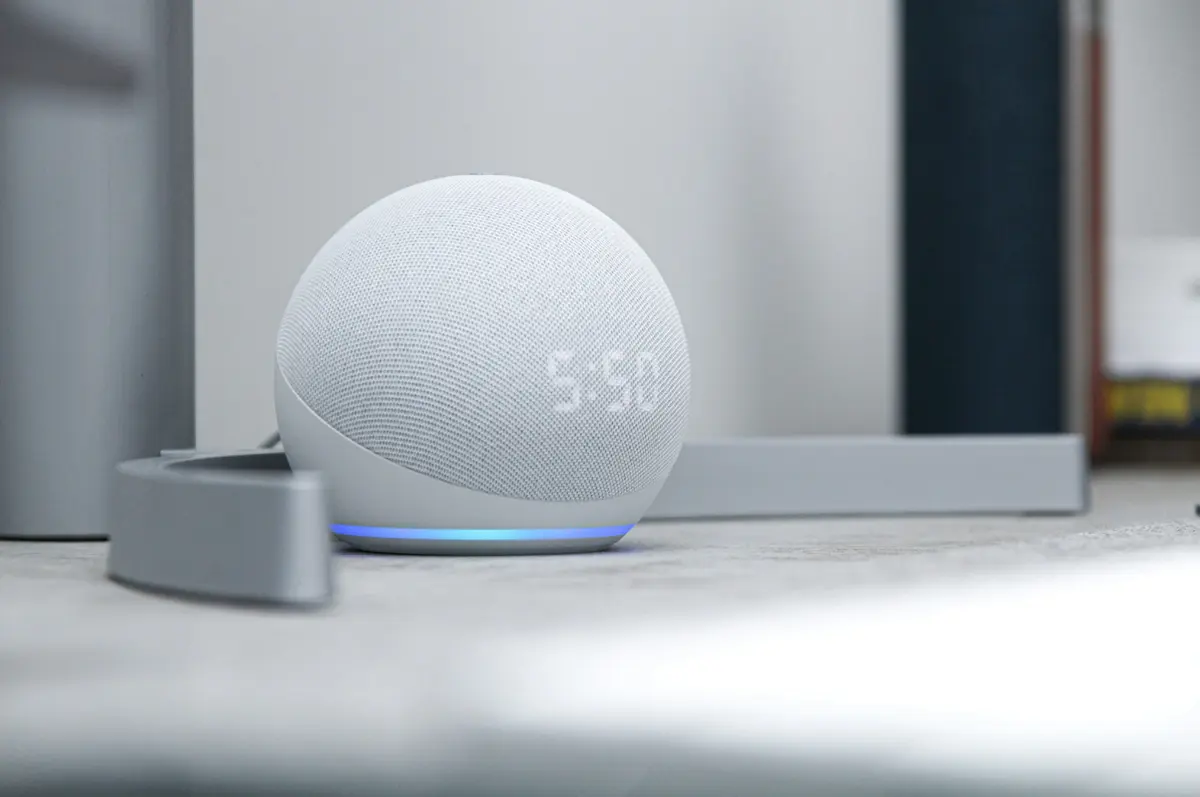
Scientists have been studying Natural Human Language for decades. Alex is the all-knowing, interactive voice assistant from Amazon. Alex is the voice of Amazon’s Echo devices, such as the Echo Dot, and Echo Tap, as well as the Amazon Fire TV and other third-party products. People saw Alex’s capabilities develop dramatically, and Machine Learning is clearly to applaud.
But how does it work?
What technologies are being used?
Conversational AI Demystified: #
You’ve probably spoken with a lot of machines in your life, whether it’s a support agent when you call your internet provider, an online bot on a website when you ask how to reschedule your travel ticket, or Alex when you ask for a recommendation for a decent pizza nearby.
What differs between these technologies from each other is how intelligent they really are. That’s where Conversational AI comes in. Conversational AI is that the technology that ultimately enables machines to naturally interact with humans via language. It’s a subset of Artificial Intelligence that leverages concepts like:
- Automatic Speech Recognition (ASR)
- Natural Language Processing (NLP) or Natural Language Understanding (NLU)
- Text-to-Speech (TTS) with voice synthesis
The audio waveform is transformed to text at the ASR step when you ask a query to an application. During the NLP stage, the device interprets the question and delivers a smart response. During the TTS step, the text is transformed into voice signals and audio is generated for the user. Several deep learning models are also connected to a pipeline to build a conversational AI application. A similar pipeline is used in Alex as well.
Who/what is Alex? #
Alex is Amazon’s equivalent of Apple’s Sir. Alex is Amazon’s cloud-based voice service, which may be found on more than 100 million Amazon and third-party devices. With Alex, you’ll be able to build natural voice experiences that offer customers a lot of intuitive ways to interact with the technology they use every day. The Alex Voice Service (AVS) was created by Amazon to replicate real-life conversations. Alex records your voice when you ask, “What’s the weather going to be like today?” The recording is then transferred over the Internet to Amazon’s Alex Voice Services, which parses it into commands it recognizes. The system then sends the appropriate output back to your device. When you ask Alex about the weather, an audio file is delivered back to you. Alex delivers you the weather prediction without you even realizing any communication between systems. Of course, this means that if you lose your internet connection, Alex will stop working.
The word “Alex” is merely a “wake word” that tells the service to begin listening to your voice. To receive a response from most gadgets, simply pronounce the wake word. While Alex is Amazon’s official voice assistant, you may also change it and can use “Amazon,” “Computer,” or “Echo” as a wake word.
Learning From Human Data Continuously: #
Alex’s strength is data. Every time Alex misinterprets your request, the data is used to improve the system’s intelligence for the following time. Understanding natural human speech is a massive challenge, but we now have the processing capability to improve it as we use it more. Alex is always learning from human data. Natural language generating capabilities are becoming increasingly advanced, even though the human language is highly complex. Amazon continues to have an army of specialists working on improving Alex and Alex Voice Services, as well as a legion of machines. Their goal is to make the spoken language as natural as possible as talking to another human being.
How Does Amazon Alex Work? #
Natural language processing (NLP), a method of turning speech into words, sounds, and thoughts, is the foundation of Alex. It all starts with signal processing, which offers Alex many opportunities to decipher the audio by cleaning it up. One of the most challenging aspects of far-field audio is signal processing. Seven microphones are utilized to determine the signal so that the device can concentrate on it. That signal can be subtracted via acoustic echo cancellation, leaving only the relevant signal. “Wake Word Detection” is the following assignment. It determines whether the user speaks one of the required words for the gadget to turn on, such as “Alex.” If the wake word is identified, the signal is routed to cloud-based voice recognition software, which converts the audio to text format. Alex will evaluate features of the user’s speech such as frequency and pitch to provide you with feature values to convert the audio to text.
Analysis of an ‘Order?: #
Wake word, Invocation name, and Utterance are the three essential pieces of the above command.
*? **Wake Word:***When users speak “Alex,” the device wakes up. The wake phrase activated Alex’s listening mode, allowing it to take commands from users.
? Invocation Name: The keyword used to trigger a specific “skill” is called the invocation name. The invocation name can be combined with an action, command, or query.
? Utterance: When a user requests Alex, they will use utterances. From the given utterance, Alex deduces the user’s intent and answers accordingly. In other words, the utterance determines what Alex will do for the user.
After that, Alex-enabled devices send the user’s instructions to Alex Voice Service, a cloud-based service (AVS). Consider the Alex Voice Service to be the brain of Alex-enabled devices, doing all of the complicated tasks like Automatic Speech Understanding (NLU). The Alex Voice Service analyses the response and determines the user’s purpose before sending a web service request to a third-party server if necessary.
Machine Learning Has Facilitated Extensive Growth: #
Alex is getting smarter all the time. Alex has figured out how to continue on a conversation from one inquiry to the next in the same way that humans do. If you don’t know the precise name of a skill you want Alex to perform, it will most likely be able to summon it if you get near. Additionally, using Alex Hunches and smart home connected devices, the assistant will be able to notify you if a normal pattern has been broken, such as lights being left on or a door being left unlocked, and will offer to fix it for you. These are significant advancements over what was available only a few years ago in terms of a more conversational and sophisticated voice assistant.
These are significant advancements over what was available only a few years ago in terms of a more conversational and sophisticated voice assistant. You guessed correctly. Machine learning has enabled these advancements.
Related reading
- Ditch Your Rule-Based Chatbot Strategy for Conversational AI Bots
- How Conversational AI Help Drive More Sales For Your Business
- How Conversational AI Works? 8 Specific Components of an Efficient Conversational AI
More in Artificial intelligence
Questions and answers
How Does Amazon Alex Work? #
Natural language processing (NLP), a method of turning speech into words, sounds, and thoughts, is the foundation of Alex. It all starts with signal processing, which offers Alex many opportunities to decipher the audio by cleaning it up.
Alex records your voice when you ask, “What’s the weather going to be like today? #
" The recording is then transferred over the Internet to Amazon’s Alex Voice Services, which parses it into commands it recognizes. The system then sends the appropriate output back to your device.