Frontier AI startups are quietly abandoning research publication in favor of product shipping, and that shift changes what builders can actually learn from.
A lab’s public stance on open weights is trending right next to a $500 fine-tune that beat frontier models — the gap between talk and practice, in real time.
A GrapheneOS user’s phone auto-wiped during a border search — now they’re facing charges, testing whether default security features count as obstruction.
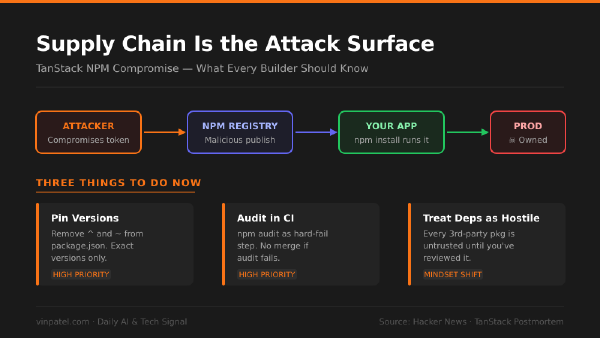
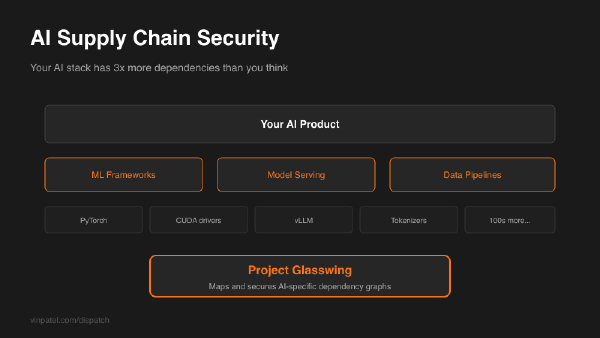
OpenAI and Hugging Face disclosed a security incident in model eval infrastructure — a wake-up call for anyone running eval pipelines against hosted models.
OpenAI and Hugging Face disclosed a security incident tied to model evaluation infrastructure, exposing how fragile cross-vendor AI pipelines really are.
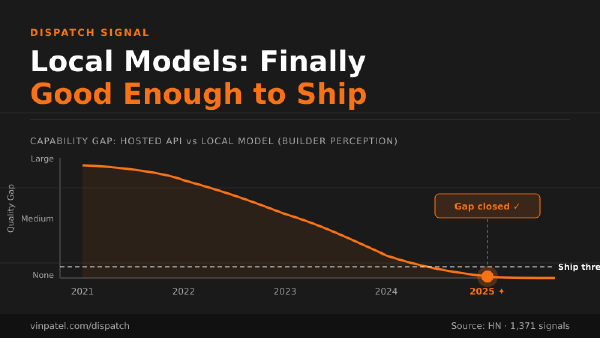
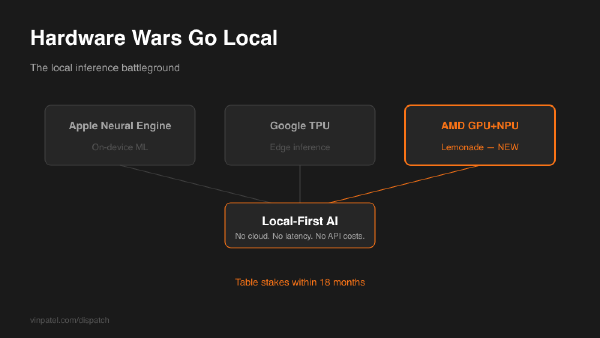
Open-weight models like Kimi K3 are closing the capability gap with closed APIs, turning model choice into a business decision, not a technical constraint.
HN’s top thread asks if we’re offloading too much cognition to AI, while a sister thread on scrubbing Claude’s tics from your prose reveals just how deep that offload already goes.
Chat Control’s client-side scanning would break real E2EE claims, and this week’s GitHub AI exploit shows exactly why scanning hooks become attack surfaces.
OpenWrt One tops HN alongside FOSS maps and open AI hardware — builders are quietly replacing rented infrastructure with owned, auditable alternatives.
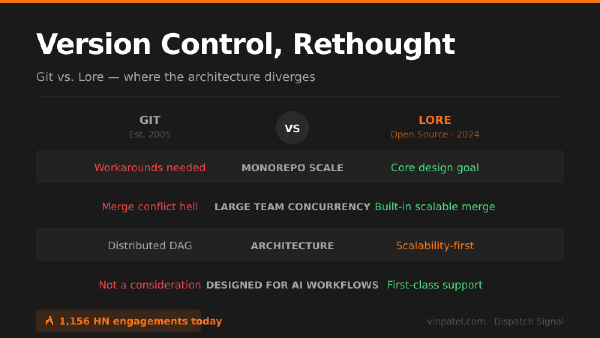
Lore is an open-source version control system challenging Git’s dominance with a scalability-first architecture that builders of large codebases should watch.
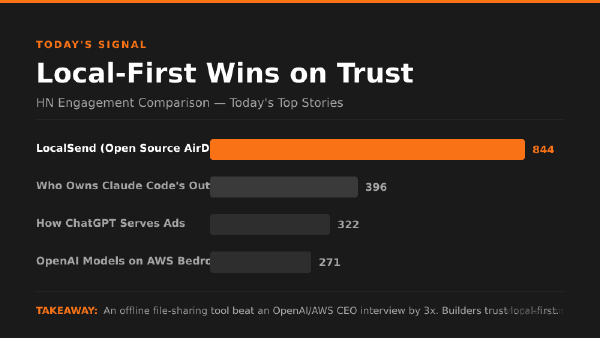
LocalSend, an open-source AirDrop alternative, is trending hard—proof builders still crave local-first, privacy-respecting tools over cloud-dependent defaults.
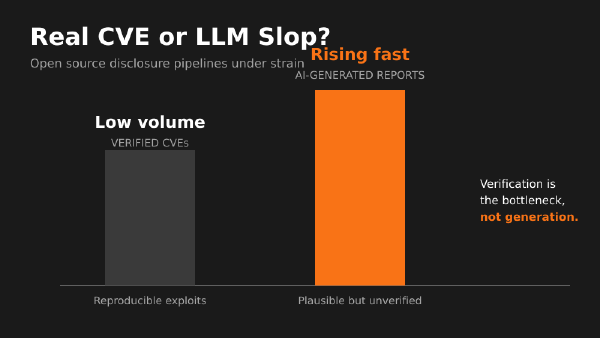
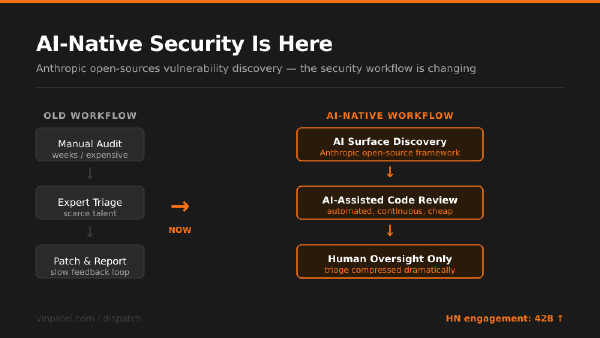
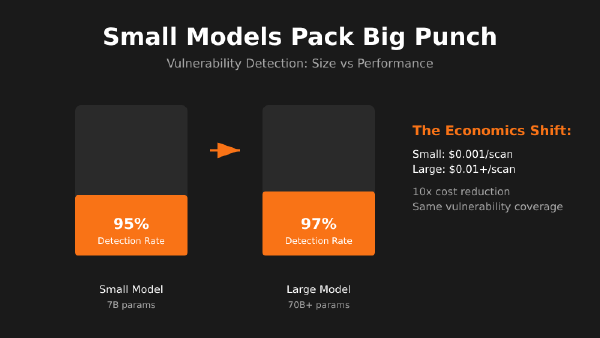
Smaller AI models are proving just as effective as large ones at discovering security flaws, changing the economics of automated vulnerability detection.