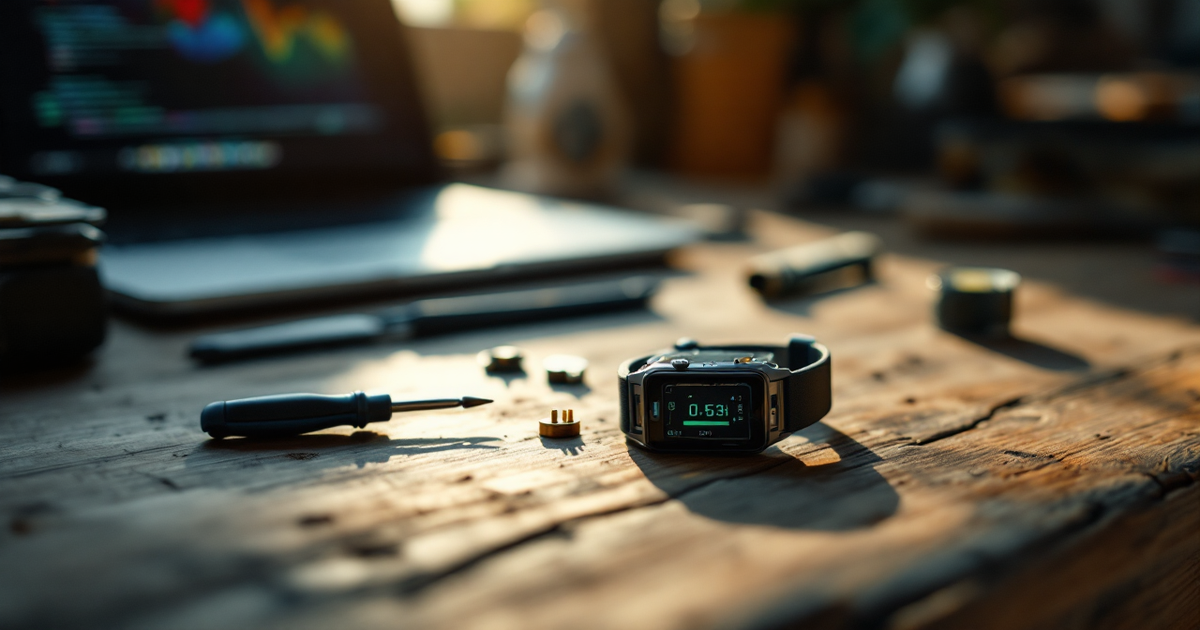
Repairable, USB-C, Open API: The Watch Developers Actually Want
A repairable, USB-C, developer-friendly GPS watch is trending on HN — proof builders want open hardware, not sealed ecosystems.
The signal: A repairable GPS smartwatch with USB-C charging and an open developer API is topping Hacker News today, beating out enterprise security stories pulling in more than double its engagement.
Why it matters: Every major wearable — Apple Watch, Garmin, Whoop — is a sealed black box you can’t repair, can’t extend, and can’t build against without jumping through vendor hoops. Una is betting that developers and tinkerers will pay for the opposite: a device you can crack open, charge with a cable you already own, and write code for without an NDA. That’s not a niche preference anymore — it’s a market segment the big wearable makers have deliberately ignored for a decade.
Does open hardware actually beat closed ecosystems, or is this just HN nostalgia?
It’s not nostalgia — it’s a real, growing lane that closed hardware makers can’t easily enter without cannibalizing their own margins. Repairability and USB-C aren’t ideological positions anymore; they’re regulatory realities and consumer expectations that even Apple only adopted when forced to. A device that ships open-by-default skips that fight entirely and turns “developer-friendly” into the actual product spec, not a marketing line. The audience that shows up for this on HN is exactly the audience that will write the SDKs, ports, and integrations that make a small hardware company’s ecosystem look bigger than it is. That free labor is the real asset here, not the watch itself.
The pattern I’m watching: Hardware companies are starting to treat “buildable by strangers” as a growth strategy instead of a liability — the same shift that happened with open-source software a decade ago, now moving into physical devices. Right-to-repair pressure, USB-C standardization, and dev-tooling culture are converging into a genuine alternative to the sealed-appliance model of consumer electronics.
What I’d do with this: If you’re building anything hardware-adjacent — fitness tracking, IoT, field devices — treat Una’s spec sheet as the new baseline expectation, not a bonus feature. If you’re a pure software builder with no hardware plans, read this as a signal about your users: the same people buying repairable watches are the people who’ll churn off your app the moment you lock them into a closed API or a subscription with no export path. Build like someone’s going to want to take it apart.
Key takeaways
- A repairable, USB-C, developer-friendly GPS watch outranked enterprise security news on Hacker News today, showing where builder attention actually goes.
- Right-to-repair pressure and USB-C standardization have turned “open hardware” from an ideological stance into a genuine product strategy for smaller hardware companies.
- Developer-friendly hardware earns free ecosystem labor — SDKs, ports, integrations — that closed platforms have to pay for or build in-house.
- If you’re building consumer hardware or IoT devices, repairability and open APIs are becoming baseline expectations, not differentiators.