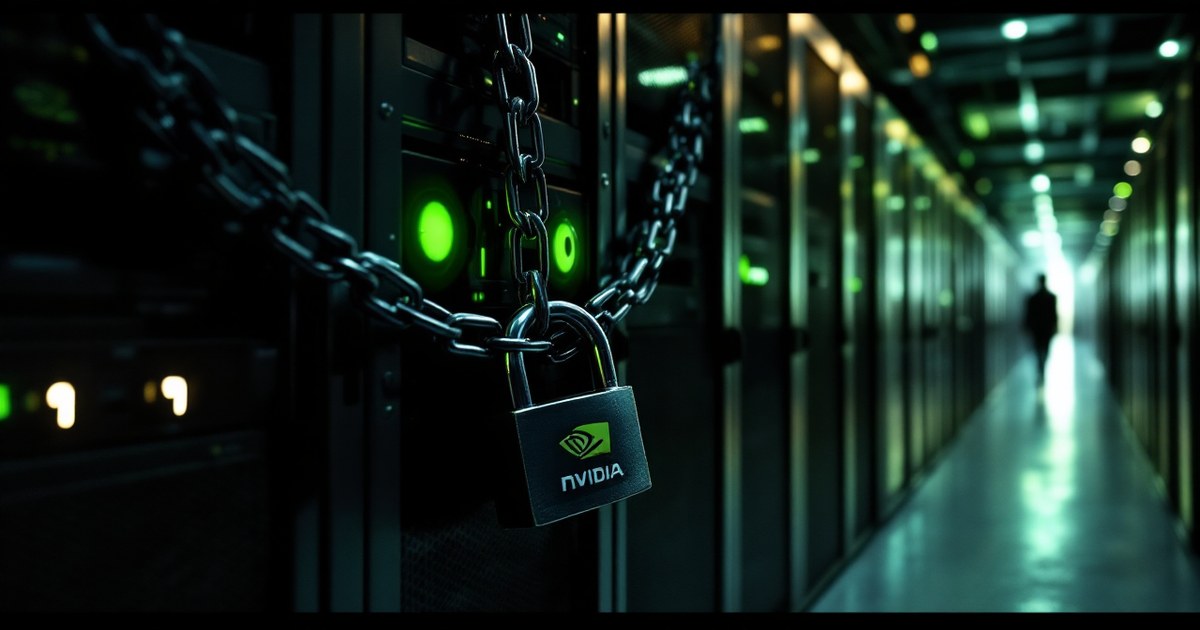
If You Build on Hugging Face, Nvidia's $13 Billion Buy Is Your Problem
Nvidia's $13 billion purchase of Hugging Face turns the open-model hub builders rely on into chip-maker property.
If you pull model weights from Hugging Face, Nvidia just became your landlord. A $13 billion deal hands the open-model hub to a chip maker with its own agenda.
This isn’t a single acquisition landing out of nowhere. It’s the next step in a pattern that’s been accelerating for months: Nvidia buying its way into every layer of the stack it doesn’t already control through silicon alone.
Here’s the sequence, oldest first. For years, Hugging Face hosted the open weights of every major AI lab, Nvidia’s rivals included, as neutral ground that no single company owned. Then TechCrunch reported that Nvidia had agreed to buy the company outright, at a price that undercounted what came next. Days later, Ars Technica confirmed the same acquisition at $13 billion, retiring the nickname that had followed Hugging Face for years: “the GitHub of AI.”
The through-line is the part worth sitting with. Nvidia already owns the compute layer — the GPUs everyone rents or buys to train and serve models. It already owns large chunks of the software layer through CUDA lock-in. What it didn’t own was the distribution layer: the place where open weights, datasets, and model cards actually live, the default download source for anyone building on open models instead of a closed API. Buying Hugging Face closes that gap. It’s the difference between selling shovels and owning the map of where the gold is buried.
For teams that build on open-source models pulled straight from Hugging Face’s hub, that’s not an abstract governance question. It’s a supply-chain question. Whoever owns the repo can change what’s featured, what’s rate-limited, what’s deprecated, and whose competing checkpoints get quietly buried under Nvidia’s own. None of that requires malice. It just requires an incentive, and Nvidia now has one it didn’t have last month.
Here’s the falsifiable version of that concern: if AMD, Google, and every other GPU vendor can still host and serve competing model weights through Hugging Face without friction by March 2027, this was a distribution play and nothing more. If access starts narrowing before then — slower downloads for non-Nvidia hardware, preferential placement for Nvidia-optimized checkpoints, or new terms that favor Nvidia’s own cloud — this was the moat, and the neutral-ground era of open AI infrastructure is over.
The pattern to watch isn’t the price tag. It’s whether “open” infrastructure can stay open once the company selling the picks and shovels also owns the general store. If you’re betting a product roadmap on open weights staying vendor-neutral, this is the week that bet got riskier — and the piece on why AI agents are already eating the SaaS layer is worth rereading with Nvidia’s new position in mind, alongside the longer view on where this decade of AI is heading.
One AI signal a day. 90 seconds. No fluff. Subscribe at /subscribe/ for the next one.