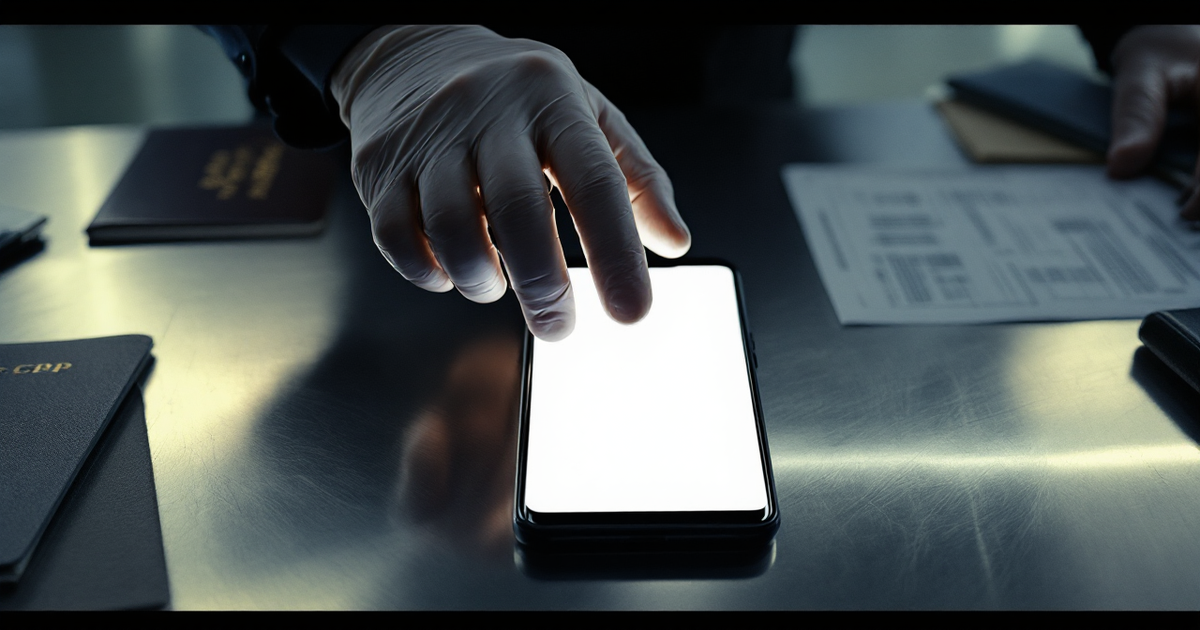
GrapheneOS Wipe Case Turns Privacy Feature Into Criminal Charge
A GrapheneOS auto-wipe during a border search led to criminal charges, exposing the legal risk hiding inside every privacy-hardened phone.
The signal: A US citizen was charged after their GrapheneOS-hardened phone auto-wiped during an airport border search, turning a privacy feature into a criminal liability.
Why it matters: For anyone shipping security features, this is a wake-up call — auto-wipe, duress PINs, and panic buttons are legally untested territory, and “destruction of evidence” charges can attach even when the wipe fires by design, not by malicious intent. The border search exception lets CBP inspect devices without a warrant, and a device that resists that search can itself become the offense. If you build privacy tooling, you have to think past technical resistance and start modeling legal exposure for the humans using it.
Does building auto-wipe into your product put users at legal risk?
Yes — if the wipe destroys data a government agent was mid-search on, prosecutors can frame it as obstruction or destruction of evidence, regardless of intent. GrapheneOS’s duress PIN and wipe-after-failed-attempts features are marketed as hardening, but at a border checkpoint, where CBP claims broader authority than anywhere else in the country, the same technical behavior reads as evasion. The line between “I forgot my real PIN” and “I sabotaged a federal search” is being drawn by prosecutors right now, not by the engineers who wrote the feature. This case won’t be the last one, and precedent is forming before the courts have settled what’s actually legal.
The pattern I’m watching: We keep shipping tools that assume more security is always better without modeling adversarial legal contexts — the same tension shows up in disk encryption cases, Signal’s disappearing messages, and now hardened mobile OSes. Security-by-design keeps colliding with search-and-seizure law at the border, a zone with almost none of the Fourth Amendment protection people assume they have.
What I’d do with this: If you build privacy or security products, add explicit legal-risk warnings alongside your threat-model docs — don’t let users assume “more locked down” is strictly safer. Consider making panic-wipe behavior configurable instead of default-on, so users aren’t silently defaulted into jeopardy they didn’t choose. And if you’re advising on “duress” features, get an actual lawyer in the room before you ship, not after someone gets charged.
Key takeaways
- A privacy feature that resists a border search can itself become the basis for criminal charges, regardless of the user’s intent.
- CBP’s border search authority permits warrantless device searches, and existing law offers almost no protection once prosecutors frame the result as destruction of evidence.
- Builders shipping auto-wipe, duress PINs, or panic-button features need explicit legal-risk documentation, not just a technical threat model.